AE 155 - Jul / Aug 2026
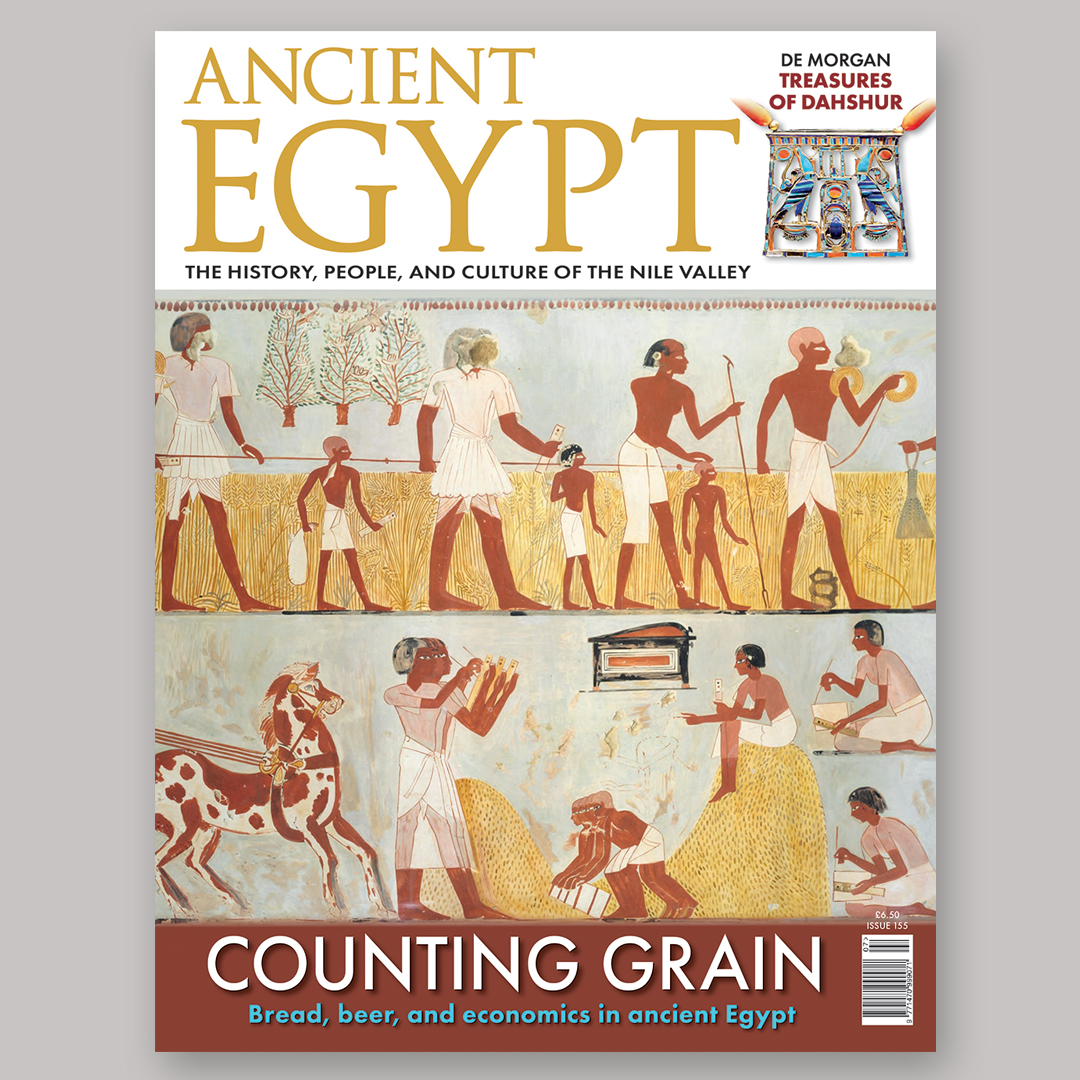
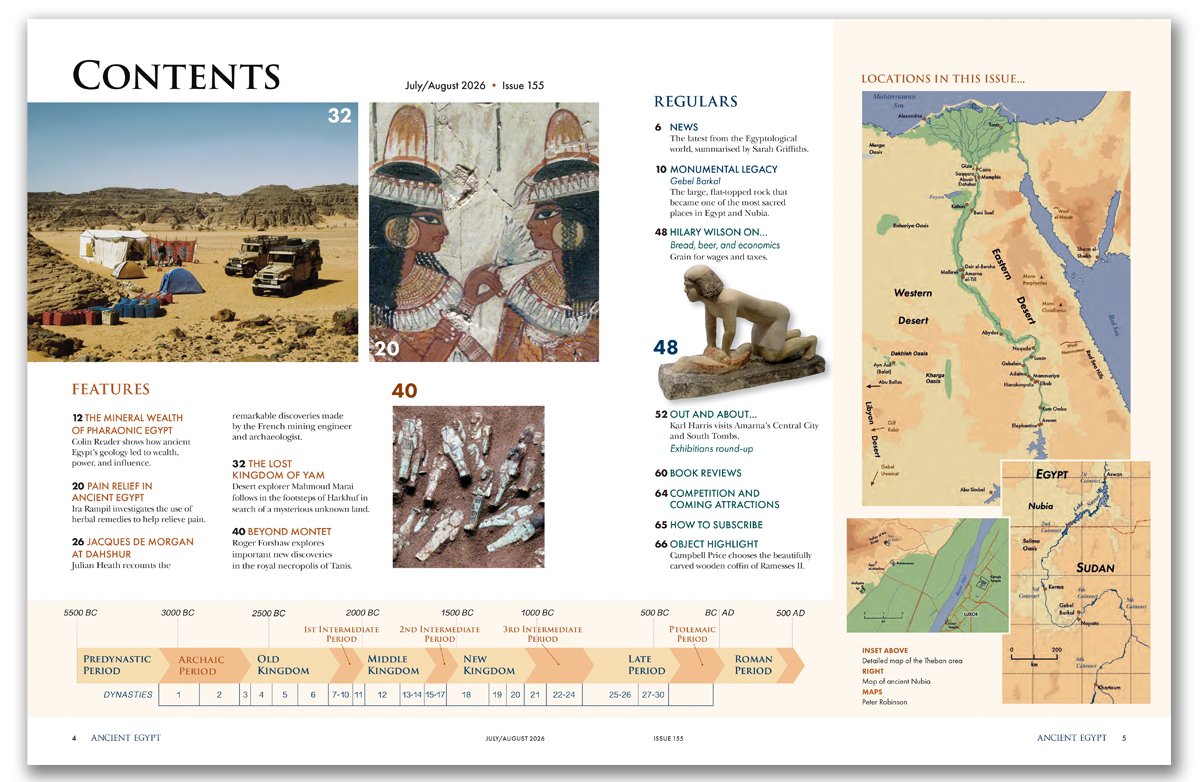
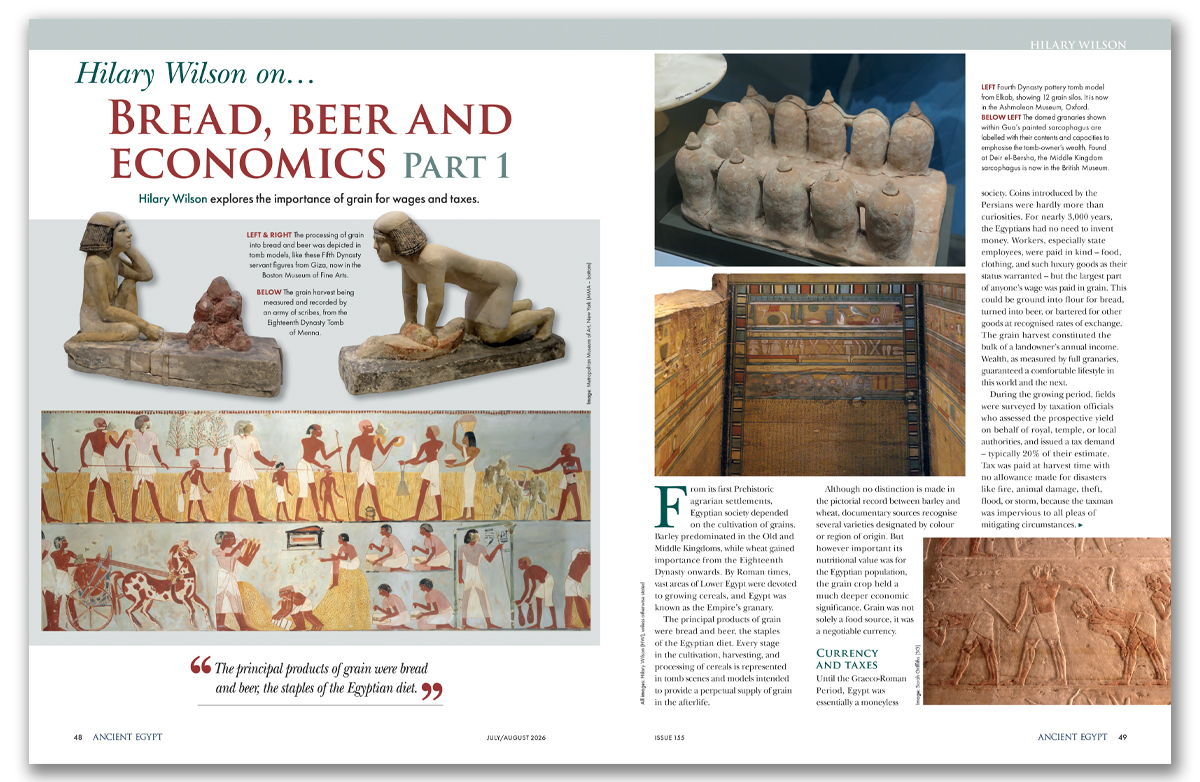
It is difficult for us to imagine what it must have been like to live in a society without money. In ancient Egypt, as Hilary Wilson explains in this issue, there were no coins or banknotes, but there was a universally accepted medium for exchange: grain. Workers were paid in grain. Whatever was not consumed as food could be exchanged for goods and services, and the wealth of an individual was determined by the quantity of grain he or she owned. Huge grain silos in temple grounds or on private estates were the equivalent of bank vaults. An army of scribes recorded the potential yield of every farmer’s field and taxed it (in grain) accordingly.
The central area of Amarna is described by Karl Harris in the second part of his guide to Akhenaten’s capital. While Amarna is now firmly established as a tourist destination, there are still places in Egypt that are very difficult to access, such as Gebel Uweinat in the Western Desert. Explorer Mahmoud Marai tells of the inscription he discovered there that gives us clues as to the location of the mysterious land of Yam, which was visited by Harkhuf, the Middle Kingdom Governor of Elephantine.
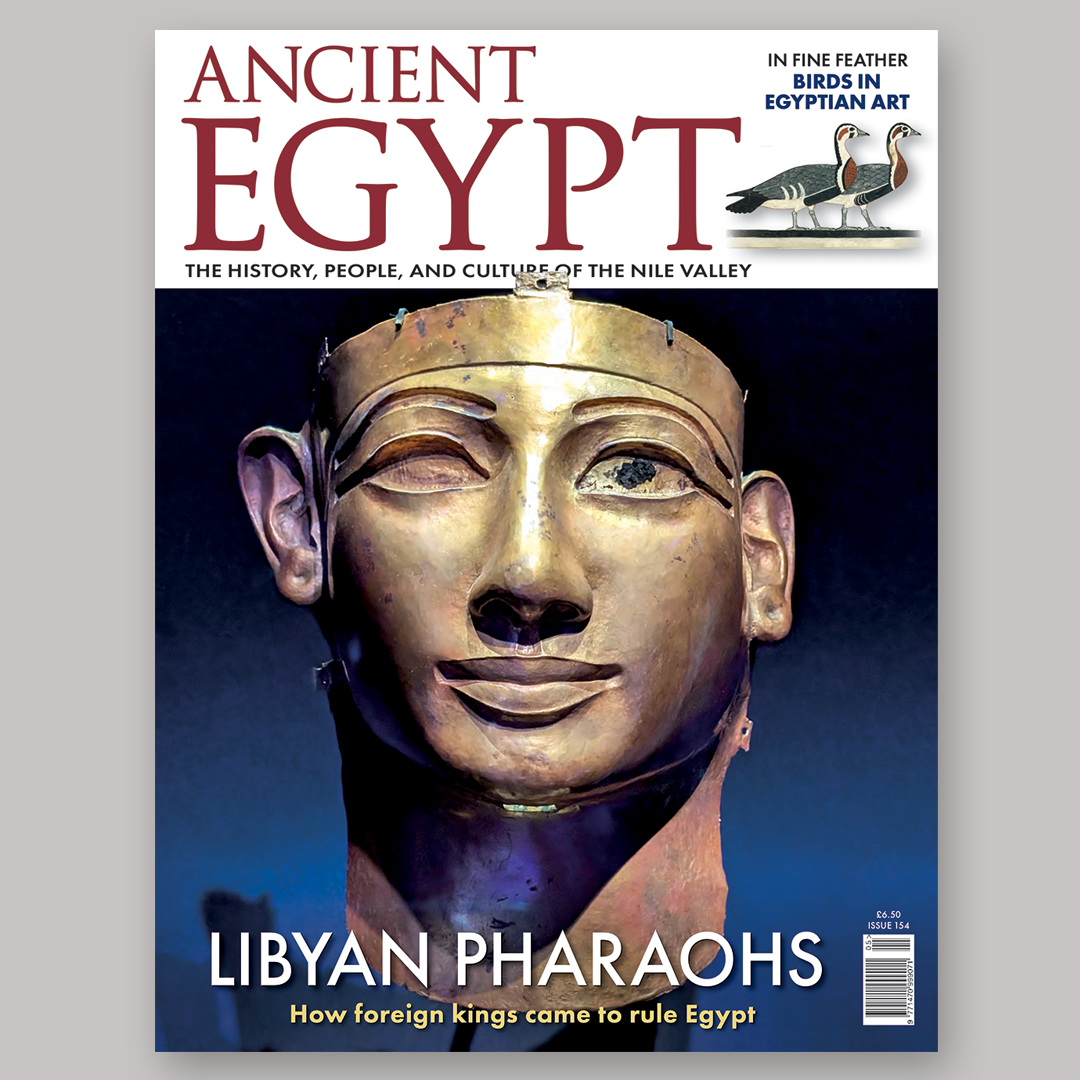
In AE 154, Aidan Dodson traced the complicated family tree of the Libyan pharaohs of Egypt. Roger Forshaw now lists the latest discoveries made at Tanis, their capital city.