AE 153 - Mar / Apr 2026
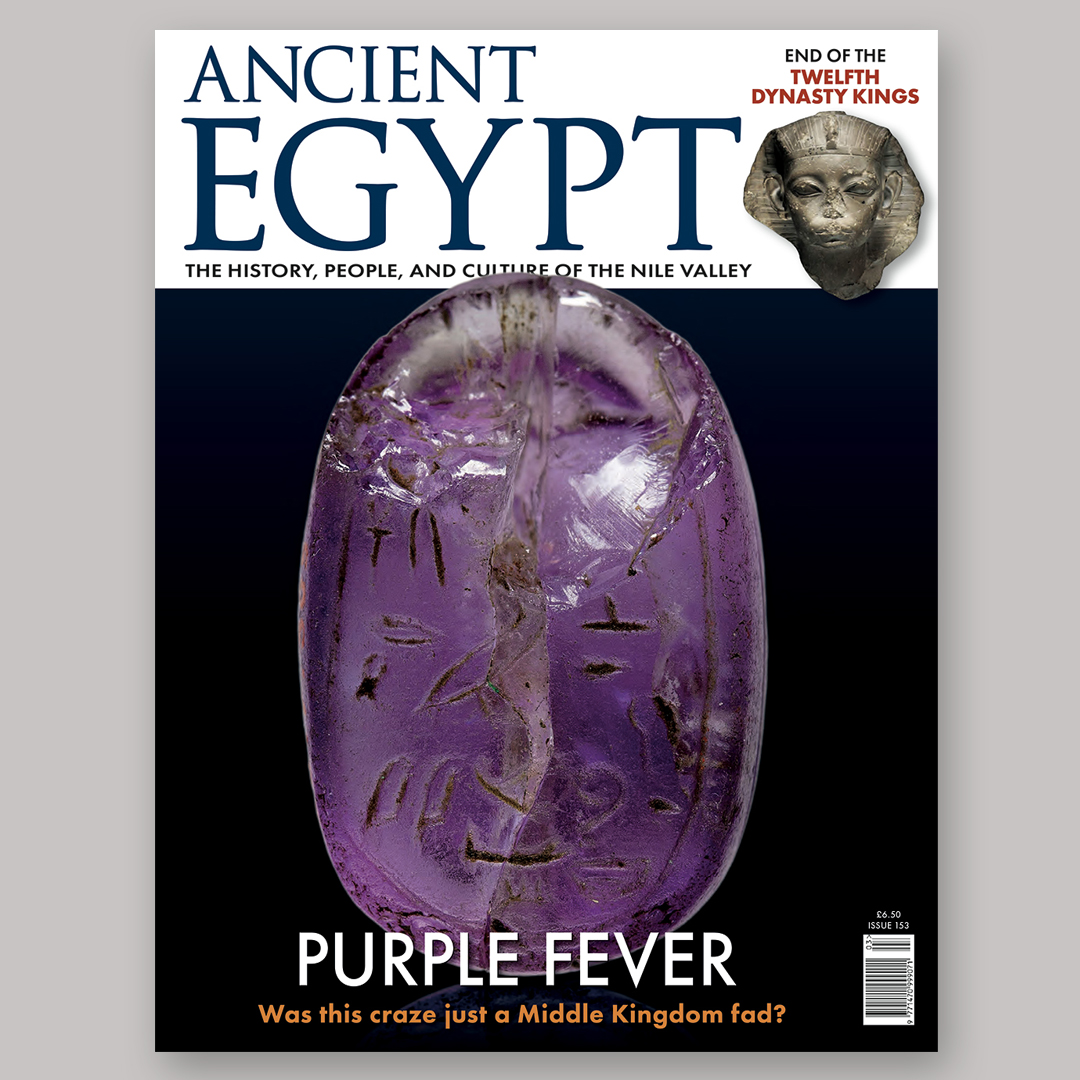
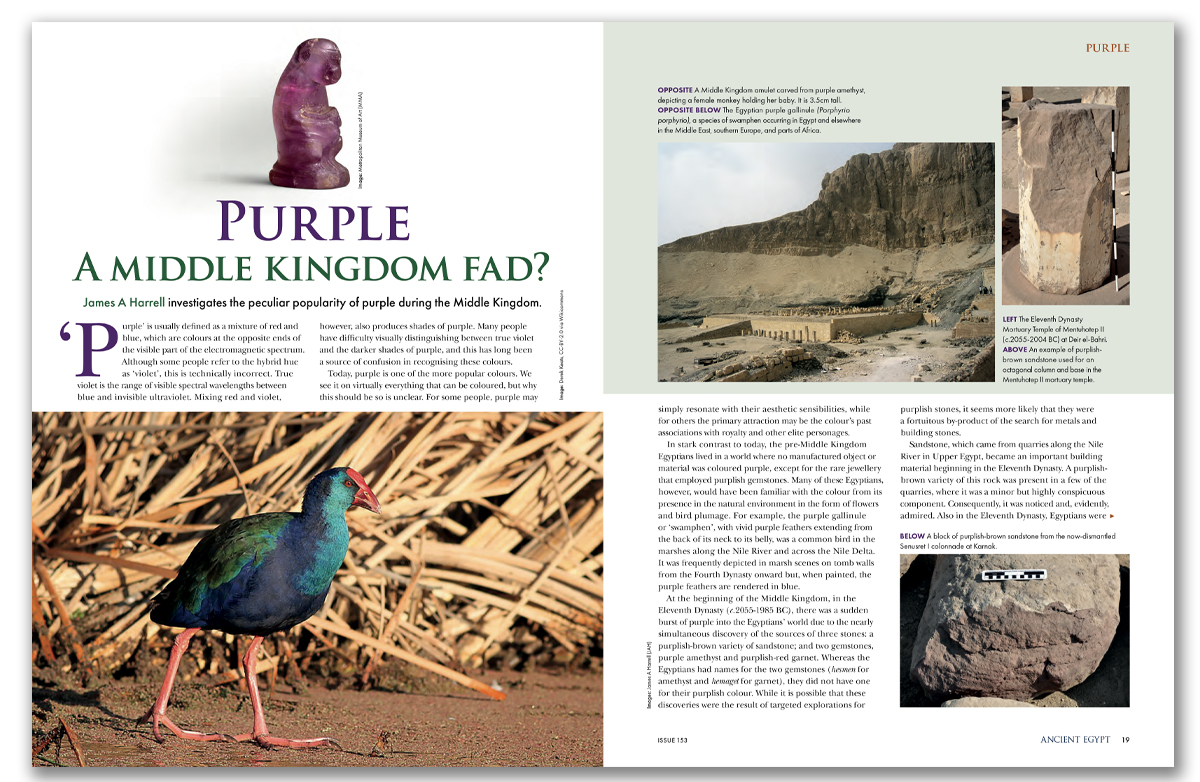
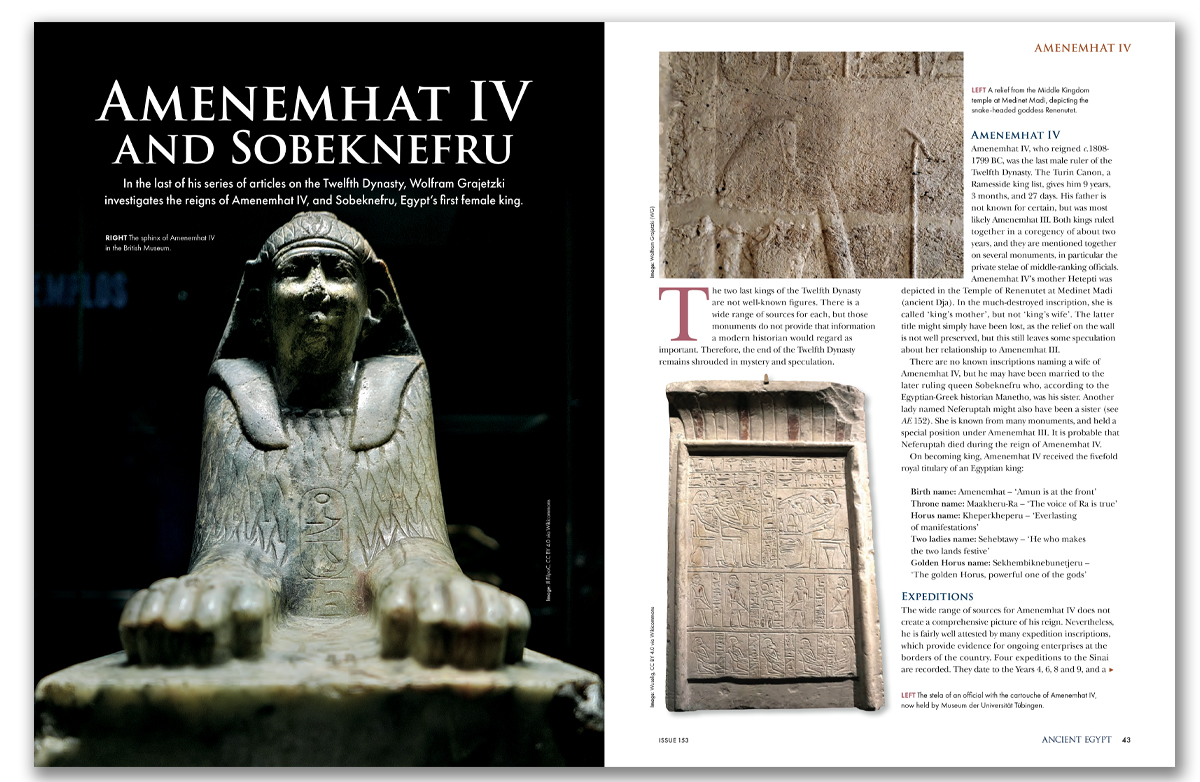
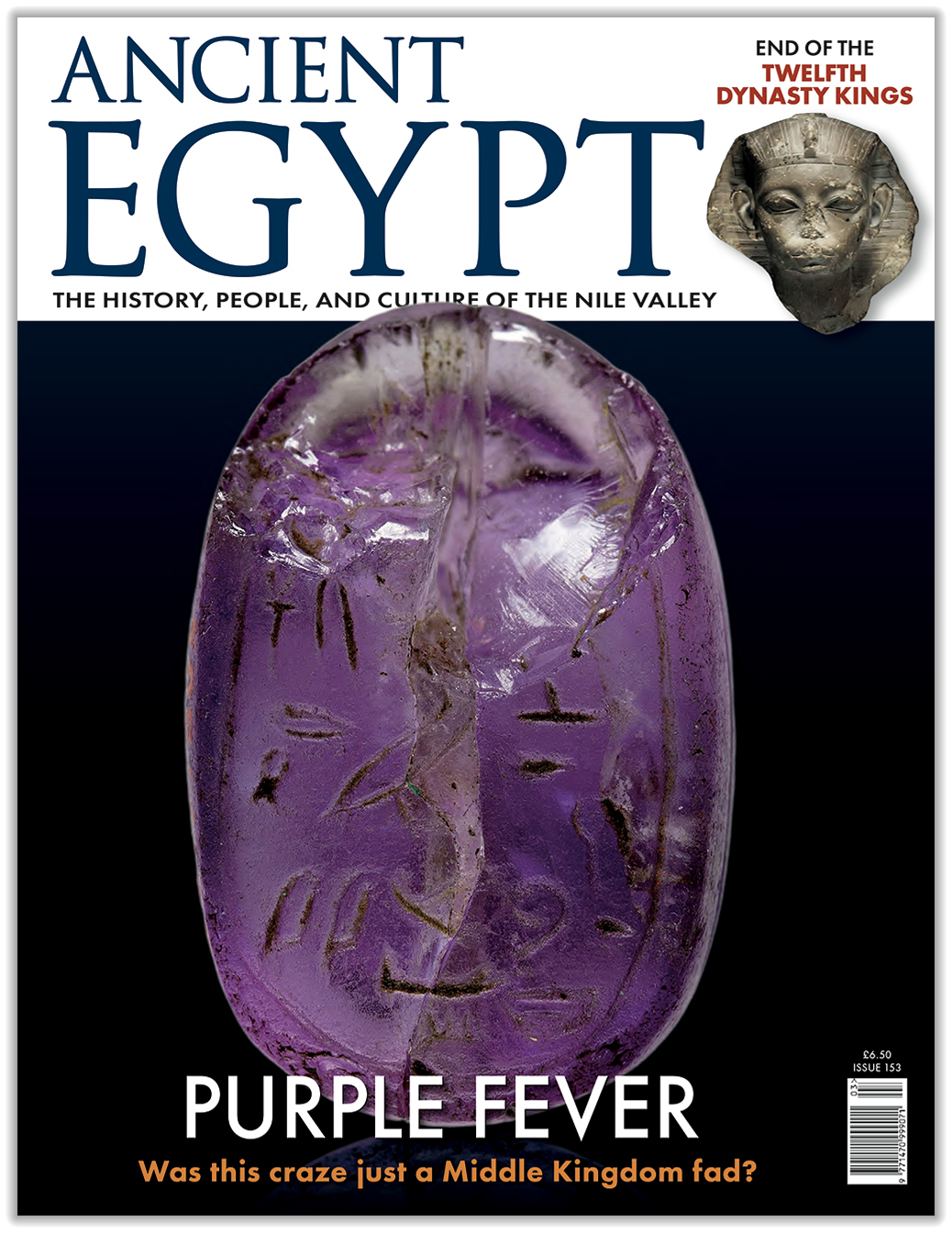
Readers may be as surprised as I was to realise that the colour purple was almost unknown in ancient Egypt until the Middle Kingdom when, as James Harrell tells us in his article, the discovery of sources of amethyst and garnet, and of a purple-tinged sandstone, made the colour suddenly fashionable. The Middle Kingdom is also represented in this issue by the final instalment of Wolfram Grajetzki’s series on the Twelfth Dynasty, where he describes the life and times of Amenemhat IV and Queen Sobeknefru.
To shift focus to the Old Kingdom, Peter Lacovara tells us about the brilliant work done by Dows Dunham in reconstructing the contents of the Tomb of Hetepheres, when all the wood had turned to dust and only the surface gilding remained. It is sad to hear that Dunham’s contribution to Egyptology was not initially recognised by his boss, George Reisner.
Maiken Mosleth King describes life in a typical town in the Roman Period through the medium of the tombstones of its inhabitants. And the artefacts on display in the Alexandria museum visited by Geoffrey Lenox Smith also date mostly from the Graeco-Roman Period, when the city became the country’s capital.
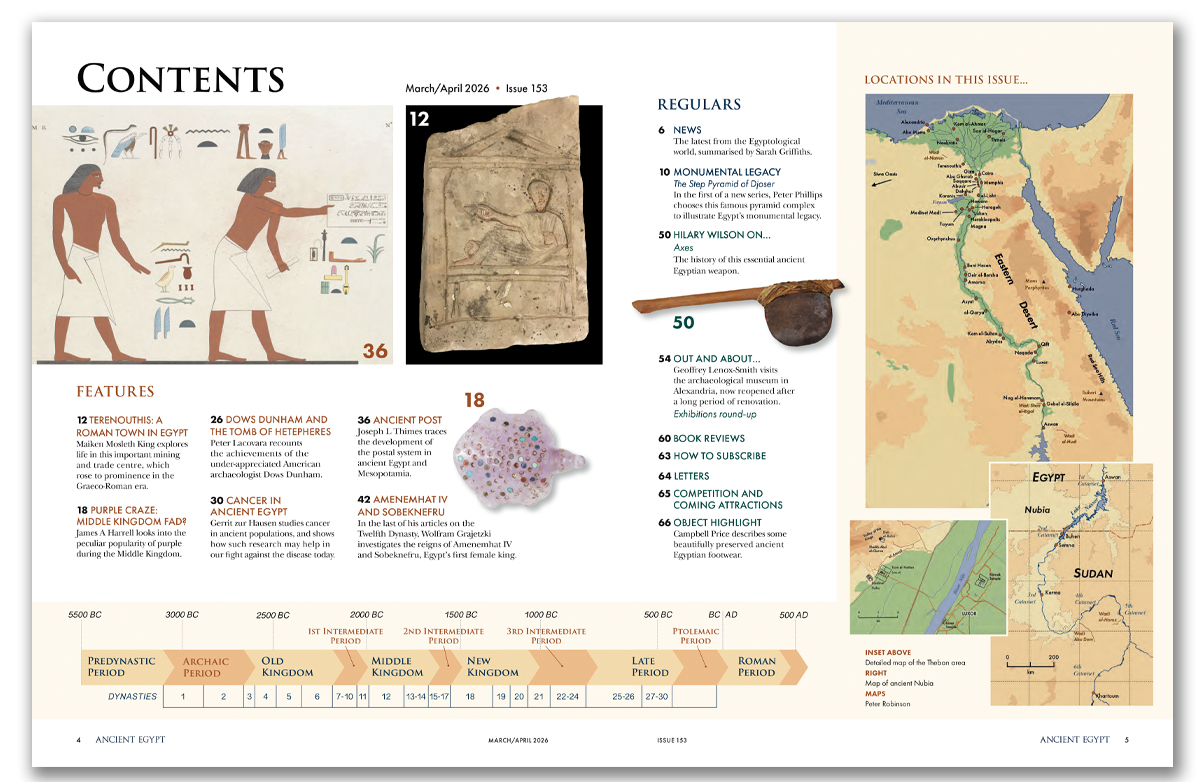
The relevance of the study of Egyptology to the modern world is made clear in an article by Gerrit zur Hausen on cancer in ancient Egypt. By examining how frequently – and in what forms – cancer occurred in the past, we gain a valuable reference point for understanding the disease.
Over the last 20 issues, we have highlighted many key developments in the study of ancient Egypt in our regular ‘Milestones in Egyptology’ feature. In this issue, we begin a new series focusing on Egypt’s ‘Monumental Legacy’, which supplements Campbell Price’s series describing museum artefacts. We hope you will approve.